

How To Draw A Subject, Cup
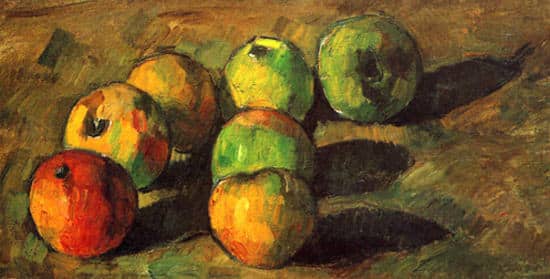
Cezanne, Oil on Canvas, still life with vii apples, 1878
Ever felt frustrated having worked so hard on a drawing – only to find it yet looks 'apartment'?
Is information technology the proportions? The perspective? Perhaps the limerick?
Whilst these all play an integral part, the virtually constructive method of making your drawings announced three dimensional, is understanding how light logic works.
If line cartoon creates the proportions, handling of tone creates the form.
The theory seems unproblematic and the changes in technique small, simply applying the principles of how tone, light and shade work, volition improve the illusion of form in every drawing you practice – regardless of the subject.
And the exciting function near information technology is, in one case y'all 'get' lighting, the principles never change.
In Part i of this three Office series (Part 2 – Cartoon shading demonstration) we look at the theory, the drawing and then pigment a simple class focusing on shadow, calorie-free and edges.
You might detect it isn't your drawing technique that's wrong, simply your lighting…
How does light behave when information technology hits a grade?
Predictably.
If we're using i single light source.
The trouble is most of the fourth dimension at dwelling house, you don't take one single light source, you have a comfy chair, a cup of tea and ten minutes to sketch your dog. There's multiple lights coming from above, window lights and perhaps lights from a t.v or reading light.
Merely by the nature of the lighting setup we take in our homes, it makes it really hard to accomplish a dramatic drawing successfully.
To brand something look 3 dimensional, you need the light to practice the work for you – rather than your pencil.
At present I'1000 the offset i to be drawn to my sketchpad whilst enjoying a brew in my lounge, but note the discussion 'sketch'.
Sketching really helps you to keep your heart practiced and your creativity flowing and I practice it every 24-hour interval.
Only when I want to work up one of my sketches into a more than developed drawing, I would accept a more than conscious approach to the lighting setup, limerick and pattern of the piece.
Creating the illusion of form using multiple light sources is hard because the effect of the light falling on an object is more confused, softer and introduces new shapes that don't behave consistently with the object nosotros're looking at.
So I've found the easiest way to larn about low-cal and shadow is by using one hard, single light. It could be the lord's day, a light through a window or an artificial lite.
A hard lite clearly demonstrates each distinct area to be aware of, exaggerating the widest tonal range and when y'all're a beginner information technology'southward the simplest way to see the difference between the tones.
So for this 3 Office Serial, we'll be looking at single lighting set ups demonstrating the theory of form on a sphere.
Learning elementary form principles will enable you to see the fundamental shapes of which all of nature is comprised. The cone, the cube, the cylinder and the sphere.
The principles nosotros'll wait at on the sphere, tin can be practical to the bend of a cheek, the fullness of a teapot or vase and I'll exist putting them into practice on a cartoon of an apple side by side week.
Lite Logic Using a Unmarried Light Source
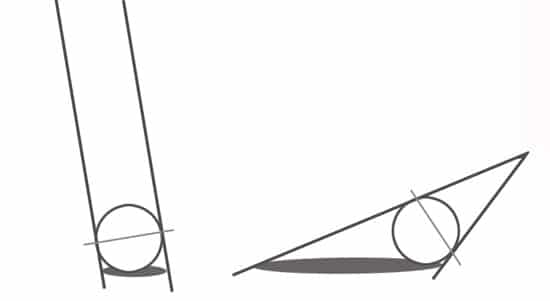
Light always travels in a directly line.
The shadows that are made past the light are always in a direct response to any the lite hits, whatever angle the light is coming from and the intensity of the calorie-free source.
Then if brilliant, high sunshine hits a tree directly from above, it makes a short shadow shape, that doesn't necessarily assistance you every bit an creative person to describe the subject.
Later in the day when the sun is very depression, information technology will make a longer more than interesting shadow shape, usually more than representative of the essence of the tree and the presence of light.
If a single light hits a cube, it will make a square shape – if a single low-cal hits a sphere, an ellipse shape.
This is called 'low-cal logic' and the shadow produced is called a Cast Shadow.
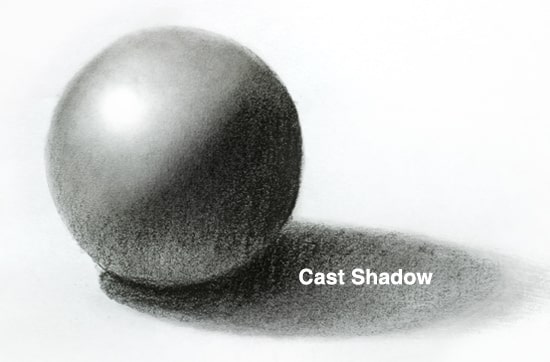
Cast Shadow
The characteristics of the cast shadow are dependent on the intensity of the light source. A hard light will produce a bandage shadow with a sharp edge, a soft light volition produce a bandage shadow with a more blurry edge.
The longer the cast shadow is from the object, the softer the edge of the shadow becomes. Notice how the cast shadow is darkest right underneath the sphere and and so it gets lighter and lighter as it goes out further away from the low-cal source.
Also a cast shadow behaves predictability when on a apartment surface, but when there are other levels or surfaces in the shadows path, the shape can be altered depending on the surface over which it falls.
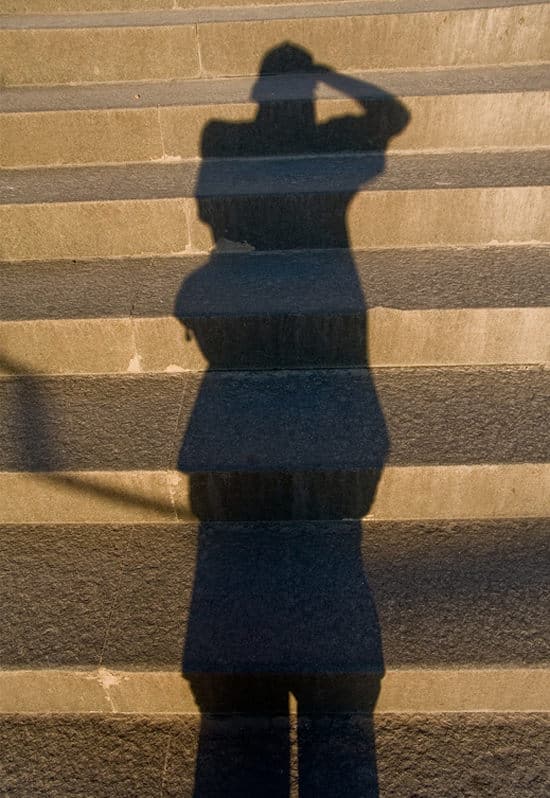
This is one of the first things to check on your drawings and paintings. Do the shadow shapes logically sit with the subject and the lighting?
It's all nigh beingness enlightened of where the low-cal is coming from and is it consistent with your flick.
Once you understand the nuts of how calorie-free behaves, it is quite encouraging to retrieve that a small amount of data can give you the cognition needed to convincingly portray the illusion of form with whatever subject.
The three areas of a form:
When you're starting time starting you only need to think of the three simple areas of the form:
1. Low-cal side – This includes the Highlight and the Halftones.
The Highlight is the lightest part where the light directly hits the object.
The Halftones are ever going to exist lighter than any value on the shadow side and blend into the shadow side (sometimes they can be split into light half tones and dark half tones)
2. Shadow side – This includes the Form Shadow, the Grade Shadow Cadre and Reflected low-cal.
The Form Shadow Core is the darkest function of the shadow, the rest of the Course Shadow is made up of nighttime tones that blend abroad from the core shadow into the reflected light, if in that location is any.
Reflected low-cal is the lite reflected onto the subject, from the surface it sits on or ambient lite effectually the object.
3. Cast shadow – This has 3 parts.
The darkest part that sits direct under the object, the mid tone that makes upwardly the majority of the bandage shadow shape and the lightest, softest tail of the cast shadow
Creating the shadow line
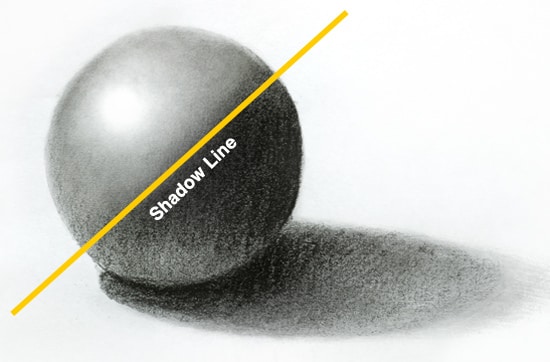
The shadow line is the transition between the low-cal side and the shadow side.
This can have many names, bed-bug line, shadow line, terminator, form shadow line to name a few. The main thing to remember is to keep each area clearly divers.
Keeping your light tones in the low-cal side and your darks in the shadows whilst maintaining a soft transition between the two is what we're trying to reach.
This seems obvious but making the smooth transition between the lights and the darks is no hateful feat every bit the shadow line actually falls over quite a small expanse and not forgetting probably the well-nigh catchy affair – retaining the fullness of the globe shape.
What can happen is you gently lighten your pencil marks and try to build up a dainty blend.
The trouble is the darker side spreads, information technology creeps, y'all work harder and harder, y'all and then call up your eraser volition prepare it.
It didn't.
At present the darks take a too severe edge and you lot've started to lose the lovely shape you first had. Your shadow line has gone Due north, your low-cal logic has at present get casuistic and your light side has become darker with all that flurry of blending!
Information technology is tricky but it only requires exercise and a few techniques that we'll look more than in depth at side by side calendar week.
The Light Side
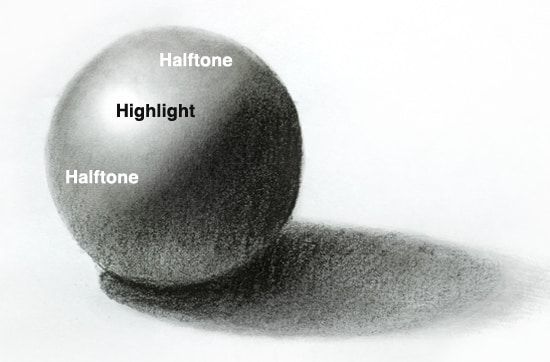
The Highlight is the very lightest office. Information technology'south where the light directly hits the object then is the all-time indicator when you expect at your subject field to decide where and at what angle the light is coming from.
Highlights make the cartoon come to life.
The Halftones alloy into the shadow side and brand the highlight appear white. They are always lighter in value than the lightest value on the shadow side.
The Shadow Side
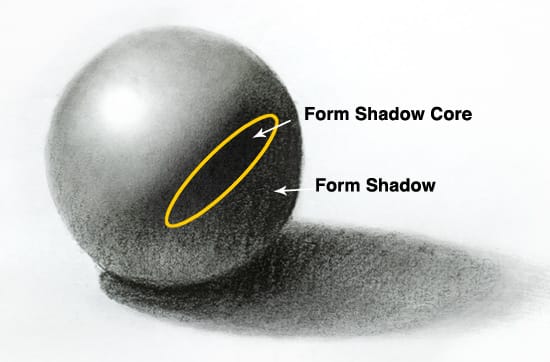
If a Cast Shadow is always difficult (albeit with blurry edges sometimes) a Grade Shadow is soft.
It is the nighttime side on an object not facing the calorie-free that reveals the form and mass of the shape.
The very darkest point within the Form Shadow is chosen the Form Shadow Core.
Information technology falls under the Shadow Line (or Terminator) on the nighttime side and is where there is no light hitting the surface.
Information technology blends into the rest of the Class Shadow which is lighter in value because reflected or ambient low-cal within the scene.
The Allure of Reflected Low-cal
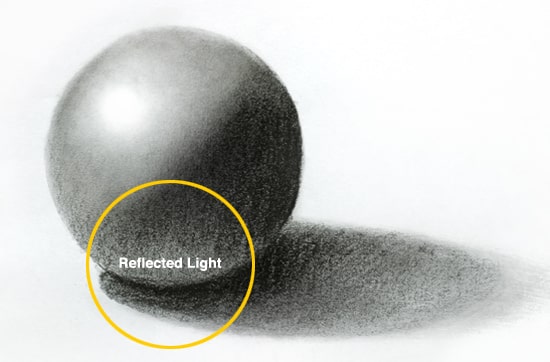
Reflected lite is when the calorie-free is reflected onto an object, from the surface it sits on. White or shiny surfaces reverberate the most lite, dark or black surfaces reflect the least corporeality of lite.
The sphere above is sitting on a matte white piece of paper.
When you're outset starting drawing it is easy to become obsessed with cogitating low-cal, it seems sophisticated then subtle.
More than frequently than not, what happens is you 'await into your darks' too much and over exaggerate how light that area actually is.
You and then lose that initial simple light concept we had first established when 'mapping out' from a lite and shadow side.
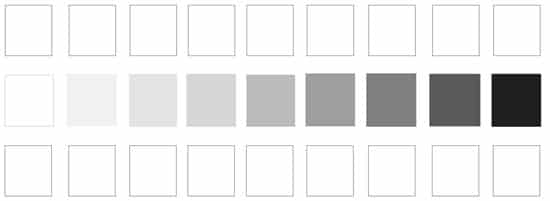
You can print out this guide and practise matching the tones with your pencils
When you're turning a form away from the light, using the tonal value strip above will be invaluable.
Because you will exist really tempted to try to utilise a lighter tone than you demand, being able to check your values will enable you to go on the illusion of light consistent.
When reflected calorie-free is handled well, it tin can give your drawings that 'How did you practice that?' response – so information technology's worth taking the fourth dimension with.
Next calendar week we're going to put these theories into practice in my studio, where I'll set upwardly and describe an apple.
When working on three dimensional drawings, the ii things I focus on are form and edges. We'll also create some quick sketches to map shadows and cover cartoon techniques on turning a course.
Get the kettle on, your pencils out and every bit you sketch, start to observe more carefully the light fall and the shadows that are being created and bring together me next week in the studio.
You Might Also Like:
1.A Beginners Guide to Lite & Shadow : Function 2 – Practical Cartoon Tutorial

Source: https://willkempartschool.com/a-beginners-guide-to-shadow-light-part-1-drawing/
Posted by: juarezroake1984.blogspot.com
0 Response to "How To Draw A Subject, Cup"
Post a Comment